the
Literary Saloon
the literary
weblog
at the
complete review
about the saloon
support the site
archive


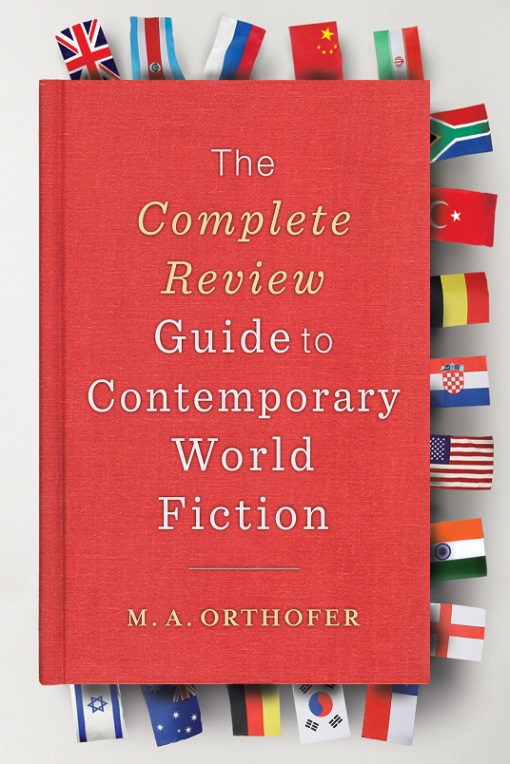
The CR Guide

The CR:the book
to e-mail us:

Books, Inq.
Bookninja
BookRiot
Critical Mass
Guardian Books
The Millions
MobyLives
NewPages Weblog
Omnivoracious
Page-Turner
PowellsBooks.Blog
Three Percent
Perlentaucher
Rép. des livres
Arts & Letters Daily
Bookdwarf
Buzzwords
The Millions
The Rumpus
Two Words
Waggish
See also: links page

opinionated commentary on literary matters - from the complete review
Bangla Academy Literary Awards | Charlotte Mandell Q & A
Bangla Academy Literary Awards
As reported at, for example, New Age Bangla Academy suspends literary award list, as the Bangla Academy announced their Literary Awards on the 23rd, and then ... de-nounced them yesterday.
Apparently:The winner list of the Bangla Academy Literary Award 2024 drew criticisms from litterateurs.
A group of writers under the platform Jatiya Sangskritik Biplab on Saturday afternoon announced that they would lay siege to the academy today morning, demanding cancellation of the list and making the academy free from the accomplices of fascism.
(Posted by: M.A.Orthofer) - permanent link -
Charlotte Mandell Q & A
At the Asymptote blog Mia Ruf has a Q & A with the translator, in Voiding the Ego: Charlotte Mandell on Translating Paul Valéry.
Mandell's translation of Monsieur Teste is recently out from New York Review Books; I haven't seen a copy yet, but see their publicity page, or get your copy at Amazon.com, Bookshop.org, or Amazon.co.uk. I do have the old Jackson Mathews translation -- see the Princeton University Press publicity page -- and I am a big fan of the work.
Mandell mentions:[Mathews] often attempted to make the text a little bit “easier,” and shortened some of the sentences, but I tried to just stay as true as possible to the original -- both in terms of the sentence length, and also the way by which the thought unfolds.
(Posted by: M.A.Orthofer) - permanent link -
New Asymptote | Prix Sévigné | Gordon Burn Prize shortlist
New Asymptote
The January 2025 issue of Asymptote is now out -- lots of great material for your weekend-reading.
(Posted by: M.A.Orthofer) - permanent link -
Prix Sévigné
The Fondation de la Poste has announced the winner of the 2024 prix Sévigné, a prize for a volume of correspondence, and it is for a collection Italo Calvino's correspondence, Le métier d'écrire; see also the Gallimard publicity page.
Great to see a letters-prize --maybe the USPS or Royal Mail can be inspired to do something like this .....
(Impressively: an English edition came out in 2013: see the publicity pages from Princeton University Press and Penguin Classics, or get your copy at Amazon.com or Amazon.co.uk.)
(Posted by: M.A.Orthofer) - permanent link -
Gordon Burn Prize shortlist
New Writing North has announced the shortlist for this year's Gordon Burn Prize, awarded for: "novels which dare to enter history and interrogate the past; [...] non-fiction brave enough to recast characters and historical events to create a new and vivid reality".
I haven't seen any of these.
The winner will be announced 6 March.
(Posted by: M.A.Orthofer) - permanent link -
NBCC Awards finalists | Wolff Translator's Prize longlist
Dylan Thomas Prize longlist | 'World literature' | Perversity review
NBCC Awards finalists
The (American) National Book Critics Circle has announced the finalists for its awards.
The only title under review at the complete review is the Gregg Barrios Book in Translation Prize finalist, Robin Moger's translation of Iman Mersal's Traces of Enayat.
The winners will be announced 20 March.
(Posted by: M.A.Orthofer) - permanent link -
Wolff Translator's Prize longlist
The Helen & Kurt Wolff Translator's Prize has announced the eighteen translation from German into English published in the USA or Canada in 2024 submitted for consideration -- a good sampler of last year's translations available in English.
Embarrassingly, only one of these titles is under review at the complete review -- and that's one where I reviewed the original German version, rather than the translation: Byung-Chul Han's The Crisis of Narration, translated by Daniel Steuer.
(Posted by: M.A.Orthofer) - permanent link -
Dylan Thomas Prize longlist
They've announced the longlist for this year's Swansea University Dylan Thomas Prize -- awarded: "for the best published literary work in the English language, written by an author aged 39 or under".
There are eight novels, two short story collections, and two poetry collections on the longlist; I haven't seen any of them.
The shortlist will be announced 20 March, and the winner on 15 May.
(Posted by: M.A.Orthofer) - permanent link -
'World literature'
At Qantara.de Gerrit Wustmann explores Who defines "world literature" ? finding:Almost no one likes to admit it, but non-Western literature in German translation is (again, with some exceptions) a subsidised business, which rarely covers its costs.Much as I wish there much more available in translation, this is not quite right:
Media attention is too limited, as is public interest in anything that could be perceived as "foreign". Small publishers and lesser-known authors have a hard time in the book trade anyway, due partly (if not only) to the market heft of large chains and online retailers, who aim for quick sales rather than cultural sustainability.Iran, Egypt, Turkey and Saudi Arabia are just as likely as Germany, the United States or France to produce world-class prose and poetry. It's just that we don't hear much about them because so little is translated and those few translations that do exist are usually overlooked.But, sure:So long as amateurish marketing by large publishers combines with the invisibility of small publishers, ignorance in the media and trade, and reluctance on the part of the public, then talk of a true "world literature" will remain little more than a pipe dream.
(Posted by: M.A.Orthofer) - permanent link -
Perversity review
The most recent addition to the complete review is my review of Francis Carco's 1925 novel, Perversity.
The American publisher of the 1928 English translation of this gave Ford Madox Ford the translation-credit, but in fact it was translated by Jean Rhys (with Ford having gotten her the gig).
(Posted by: M.A.Orthofer) - permanent link -
Jalal Al-Ahmad Literary Awards | Jewish Book Awards
Edgar Allan Poe Award finalists | English-language publishing in Europe
Margaret Atwood profile
Jalal Al-Ahmad Literary Awards
They've announced the winners of this year's Jalal Al-Ahmad Literary Awards, a leading Iranian literary prize, with Majid Gheisari's سنگ اقبال ('The Stone of Iqbal') winning the novel prize; see also the Cheshmeh publicity page.
(Updated - 25 January): See now also the Tehran Times report, Jalal Literary Awards reveals winners.
(Posted by: M.A.Orthofer) - permanent link -
Jewish Book Awards
The Jewish Book Council has announced the (many) winners of this year's Jewish Book Awards.
The only winning title under review at the complete review is the winner of the Jane Weitzman Award for Hebrew Fiction in Translation, Jessica Cohen's translation of Maya Arad's The Hebrew Teacher.
(Posted by: M.A.Orthofer) - permanent link -
Edgar Allan Poe Award finalists
The Mystery Writers of America has announced the finalists for this year's Edgar Allan Poe Awards.
The winners will be announced 1 May.
(Posted by: M.A.Orthofer) - permanent link -
English-language publishing in Europe
As I've mentioned before, one of the issues continental European publishers are dealing with is that local book-buyers are buying many books written in English in the original rather than the local translation, cannibalizing translated sales.
Hanser is taking a new tack with this: they've announced that they will be publishing T.C. Boyle's next novel in Germany in both German translation as well as the English original, as they've acquired the exclusive English-language rights for the EU-territories (so that the US and UK editions of the book won't be sold there).
Publisher Jo Lendle apparently discusses this in an interview in Die Zeit, but it's paywalled .....
At Börsenblatt they report more of the details -- including that the German translation will appear first, in the fall, before the English original is published in the US and in the Hanser edition in the spring of 2026. They also provide some numbers, such as that Boyle's previous novel, Blue Skies, sold 120,000 copies in the original, but also 25,000 copies in the English original in the German-speaking area alone. They also note that Sally Rooney's Intermezzo apparently sold more copies in Germany in the English original than in its German translation.
(Posted by: M.A.Orthofer) - permanent link -
Margaret Atwood profile
At Mexico News Daily Ann Marie Jackson profiles the author, in In conversation with Margaret Atwood in San Miguel de Allende.
(Posted by: M.A.Orthofer) - permanent link -
PRH takes over Text | There Lives a Young Girl in Me Who Will Not Die review
PRH takes over Text
Publishing juggernaut Penguin Random House has taken over leading Australian independent Text; see, for example, the latter's press release, Text Publishing joins Penguin Random House.
"Joins" ....
Text has an impressive list -- including the Text Classics series -- and, hey: "As we discussed our future together, PRHA has been deeply respectful of the Text legacy". (Stifle those giggles ....)
Anyway Text believes:We have agreed on a Charter of Independence that will allow Text to retain full publishing control as we continue our work of acquiring, editing, curating, designing, marketing, publicising and selling rights in our books.We'll see how that works out.
But maybe more of those Australian titles will be more widely distributed abroad ?
(Posted by: M.A.Orthofer) - permanent link -
There Lives a Young Girl in Me Who Will Not Die review
The most recent addition to the complete review is my review of a career-spanning selection of poems by Tove Ditlevsen, There Lives a Young Girl in Me Who Will Not Die.
(This is already out in the UK, and coming out in the US in March.)
(Posted by: M.A.Orthofer) - permanent link -
Thomas Bernhard Research Centre | Sharjah Festival of African Literature
Thomas Bernhard Research Centre
The official opening of the Thomas Bernhard Research Centre is at 18:00 tomorrow.
The Centre sounds promising:A key objective of the Thomas Bernhard Research Centre [...] is to create an online research platform that will make the author’s private library accessible and host future digital editions. Furthermore, the first comprehensive translation database of Thomas Bernhard’s complete works is currently being developed.
(Posted by: M.A.Orthofer) - permanent link -
Sharjah Festival of African Literature
The Sharjah Festival of African Literature runs 24 to 27 January, featurning Nobel laureates Wole Soyinka and Abdulrazak Gurnah, as well as Chika Unigwe, Tendai Huchu, Nnedi Okorafor, and Jennifer Makumbi; see, for example, Saeed Saeed on Sharjah Festival of African Literature: Key sessions not to miss at The National.
(Posted by: M.A.Orthofer) - permanent link -
Prix Jean d'Ormesson longlist | Jalal Al-Ahmad Award finalists
Prix Jean d'Ormesson longlist
The prix Jean d'Ormesson is an anything-goes prize, where the judges can nominate any books they want for the prize; they've announced the longlist for this year's prize, which is disappointingly new-book heavy; see, for example, the ActuaLitté report.
Most of the titles are French -- but Derek Walcott's Star Apple Kingdom and a Tracy Chevalier are among the longlisted titles
(Posted by: M.A.Orthofer) - permanent link -
Jalal Al-Ahmad Award finalists
The Jalal Al-Ahmad Literary Award is one of the leading Iranian literary prizes, and they've now announced the finalists; see, for example, the IBNA report. The winners will be announced later this week.
The prize seems to have been delayed this year -- it's supposed to be held on Jalal Al-Ahmad's birthday, in early December -- and, as Fars News reports, despite its high profile, seems to have been something of a dud, as winning hasn't translated into much sales success.
(Posted by: M.A.Orthofer) - permanent link -
Q & As: Caryl Phillips - Hisham Matar
Q & A: Caryl Phillips
At The Guardian Anthony Cummins has a Q & A with the 'New York-based Kittitian-British author' (and Leeds United fan), in Caryl Phillips: ‘It was Britain that made me a writer’.
(Posted by: M.A.Orthofer) - permanent link -
Q & A: Hisham Matar
At The Guardian the In the Country of Men-author is featured in this week's 'The books of my life'-column, in Hisham Matar: ‘I learned English by listening to Jane Austen audiobooks’.
(Posted by: M.A.Orthofer) - permanent link -
Banipal Prize | More secondhand booksellers in the UK
Martin Pollack (1944-2025) | Old Soul review
Banipal Prize
They've announced (warning ! dreaded pdf format !) the winner of this year's Saif Ghobash Banipal Prize for Arabic Literary Translation, and it is Katharine Halls' translation of Ahmed Naji's Rotten Evidence; see also the McSweeney's publicity page.
I haven't seen this one, but have reviewed Naji's Using Life.
This prize will be handed out along with the other (still unannounced) Society of Authors Translation Prizes on 12 February.
(Posted by: M.A.Orthofer) - permanent link -
More secondhand booksellers in the UK
At Fine Books & Collections Alex Johnson reports that the Number of Secondhand Booksellers in Britain Rising -- increasing impressively from 1,380 in 2023 to 1,616 last year.
Sounds good.
(Posted by: M.A.Orthofer) - permanent link -
Martin Pollack (1944-2025)
Austrian author -- and translator, notably of the works of Ryszard Kapuściński -- Martin Pollack has passed away; see, for example, the APA report.
It looks like only his The Dead Man in the Bunker is available in English -- see the Faber publicity page, or get your copy at Amazon.com or Amazon.co.uk -- but see also the Hanser foreign rights page for information about more of his books.
(Posted by: M.A.Orthofer) - permanent link -
Old Soul review
The most recent addition to the complete review is my review of Susan Barker's new novel, Old Soul, which is just about out.
(Posted by: M.A.Orthofer) - permanent link -
Most anticipated in 2025 lists | DNA book
Most anticipated in 2025 lists
Quite a few most-anticipated-in-2025 lists are out, including:
- Lit Hub's Most Anticipated Books of 2025 - 291 books, covering the first half of the year
- Most Anticipated: The Great Winter 2025 Preview at The Millions -- nearly 100 titles
- 30 Books We Can't Wait to Read in 2025 at Vulture
- The most anticipated books of 2025 at the AV Club
- The Most Anticipated Books of 2025 at Foreign Affairs -- "The biggest releases in foreign affairs, history, and economics."
(Posted by: M.A.Orthofer) - permanent link -
DNA book
As Emily Mullin reports at Wired, An Entire Book Was Written in DNA -- and You Can Buy It for $60; see also the Asimov Press information page.
Apparently:Each capsule was sealed under an inert atmosphere — meaning there is no oxygen or moisture inside the capsule — preserving the DNA inside for tens of thousands of years.Not the most convenient format for reading, however.
(Posted by: M.A.Orthofer) - permanent link -
Japanese literary prizes | Republic of Consciousness Prize (US+) longlist
Japanese literary prizes
They've announced the latest batch of winners of the prestigious Akutagawa and Naoki Prizes; see, for example, Alyssa I. Smith's report in The Japan Times, Japan's most prestigious literary awards go to a trio of contemporary voices.
The Akutagawa Prize was shared by Ando Jose's DTOPIA -- see the Kawade publicity page -- and Suzuki Yui's ゲーテはすべてを言った ('Goethe Said It All') -- see the Asahi publicity page; I look forward to seeing the latter.
The Naoki Prize went to 藍を継ぐ海 ('The Sea Inherits Indigo') by Iyohara Shin; see the Shinchosha publicity page.
That DTOPIA cover is ... interesting:

(Posted by: M.A.Orthofer) - permanent link -
Republic of Consciousness Prize (US+) longlist
They've announced the longlist for this year's Republic of Consciousness Prize for Independent Presses in United States and Canada (the press release is misdated '2024'; it was released yesterday).
The only longlisted title under review at the complete review is Overstaying, by Ariane Koch.
The shortlist will be announced 27 February and the winner on 12 March.
(Posted by: M.A.Orthofer) - permanent link -
Dublin Literary Award longlist
American creative writing and translation fellowships
Wortmeldungen finalists
Dublin Literary Award longlist
They've announced the longlist for this year's Dublin Literary Award -- unfortunately so far only in this cumbersome (if well-illustrated, with all the covers ...) overview. (A simple list, folks; a simple text list will do -- indeed will do much better.)
This is the prize where participating libraries -- 83 this year -- nominate the books for consideration -- the 71 that now make up the longlist -- before the panel of judges whittles it down to a shortlist ("of no more than ten titles") and then a winner.
Of the 71 titles in the running, 26 are in translation, from 15 languages.
Disappointingly, only three of the titles are under review at the complete review -- oddly, all translations from the French:I do have a few more of these, but I haven't seen the vast majority of these titles.
- Beyond the Door of No Return, by David Diop
- The Most Secret Memory of Men, by Mohamed Mbougar Sarr
- Vladivostok Circus, by Elisa Shua Dusapin
The shortlist will be announced 25 March, and the winner on 22 May.
(Posted by: M.A.Orthofer) - permanent link -
American creative writing and translation fellowships
The (American) National Endowment for the Arts has announced a whole pile of grants -- "1,474 awards totaling $36,790,500 to support the arts" -- including 35 Creative Writing Fellowships (they're all for poetry this year) and 22 Translation Fellowships, for translation projects for "works from 17 languages and 21 countries into English" (unfortunately, you have to click on to each translator to learn about these projects -- god forbid they'd provide a simple text list with the basic information on one (web-)page ...).
Good to see the translation support -- and I look forward to seeing some of these when they are published.
(Posted by: M.A.Orthofer) - permanent link -
Wortmeldungen finalists
They've announced the five finalists for this year's Wortmeldungen Ulrike Crespo Literaturpreis für kritische Kurztexte, a prize for critical, short texts that pays out an impressive €35,000; you can read the texts via the links on that shortlist page.
Among the authors of the shortlisted texts is one by Clemens J. Setz.
(Posted by: M.A.Orthofer) - permanent link -
Nobel nominees in 1974 | T.S. Eliot Prize | £2 George Orwell
Nobel nominees in 1974
The Swedish Academy opens up the archives regarding Nobel nominations and deliberations fifty years after the fact, and so they've now opened up the archives for the 1974 Nobel Prize in Literature, (in)famously shared by the Swedish Academy's own Eyvind Johnson and Aniara-author Harry Martinson.
Kaj Schueler has published his annual look at the prize-selection in Svenska Dagbladet but it is, alas, paywalled, but the Swedish Academy has released the list (warning ! dreaded pdf format !) of nominations and nominators.
First-time nominees include: Ralph Ellison, Uwe Johnson, Herbert Marcuse, 1980 laureate Czesław Miłosz, R.K.Narayan, 1994 laureate Ōe Kenzaburō, and 2005 laureate Harold Pinter.
Elie Wiesel got a lot of nomination-support in 1974 -- but Borges, Nabokov, and Malraux didn't do too badly either. Not that that helped.
(Posted by: M.A.Orthofer) - permanent link -
T.S. Eliot Prize
They've announced the winner of the 2024 T.S. Eliot Prize and it is Fierce Elegy, by Peter Gizzi; see also the publicity pages from Wesleyan University Press and Penguin, or get your copy at Amazon.com, Bookshop.org, or Amazon.co.uk.
(Posted by: M.A.Orthofer) - permanent link -
£2 George Orwell
The British Royal Mint will start selling a George Orwell-commemorating £2 coin tomorrow.
It certainly looks ... nice, and creepy:

It even comes in a limited gold edition -- though the ostensibly £2-coin sets you back £1,515.00 here ..... But even the standard issue apparently isn't really meant to circulate. A shame: it might send a ... message.
See also the AP article, ‘Big Brother is watching you': Collector’s coin marks George Orwell’s death 75 years ago.
(Posted by: M.A.Orthofer) - permanent link -
Ballerina review
Ballerina review
The most recent addition to the complete review is my review of the latest by Nobel laureate Patrick Modiano, Ballerina, coming out from Yale University Press in their Margellos World Republic of Letters-series.
(This is the sixteenth Modiano title under review at the site -- but I'm still way behind .....)
(Posted by: M.A.Orthofer) - permanent link -
Alexis Wright profile | Surendra Mohan Pathak Q & A | Strange Pictures review
Alexis Wright profile
At The Guardian Sian Cain profiles the author, in ‘I didn’t want to fit in a box of what an Aboriginal person should write’: how Alexis Wright found her voice.
(Posted by: M.A.Orthofer) - permanent link -
Surendra Mohan Pathak Q & A
In the Financial Express Garima Sadhwani has a Q & A with the The 65 Lakh Heist-author, in ‘Despite selling well, crime literature has been looked down upon’: Writer Surendra Mohan Pathak.
(Posted by: M.A.Orthofer) - permanent link -
Strange Pictures review
The most recent addition to the complete review is my review of Uketsu's novel, Strange Pictures.
This was a huge bestseller in Japan, and is now appearing in English (and many, many other languages); I'm curious to see how well it does abroad. (The appeal should translate fairly well, even if Uketsu doesn't have the same YouTube-reach in foreign markets as he does in his domestic one.)
(Posted by: M.A.Orthofer) - permanent link -
de Boon shortlists | Prix Naissance d'une œuvre finalists
Book cafes in ... Riyadh
de Boon shortlists
They've announced the shortlists for this year's de Boon Prize -- a Flemish prize for Dutch-language literature and, at €50,000 for the winner in each of the two categories -- fiction/non and children's/YA literature -- one of the top three Dutch-language book prizes.
The winners will be announced 25 March.
(Posted by: M.A.Orthofer) - permanent link -
Prix Naissance d'une œuvre finalists
They've announced the seven authors for this year's prix Naissance d'une œuvre, a French award for the best fourth, fifth, or sixth novel by an author.
The winner of this €20,000 prize will be announced 21 May.
(Posted by: M.A.Orthofer) - permanent link -
Book cafes in ... Riyadh
At Arab News Waad Hussain reports on Riyadh's literary havens: Where coffee meets the love of books,
These look pretty nice -- but not necessarily what I would have expected/hoped to find in Saudi Arabia.
(Posted by: M.A.Orthofer) - permanent link -
Victor Pelevin profile | Newman Prize for Chinese Literature
Robert Paul Wolff (1933-2025) | August Gailit's remains repatriated
New Inventions and the Latest Innovations review
Victor Pelevin profile
In The Guardian Sophie Pinkham profiles The mysterious novelist who foresaw Putin's Russia -- and then came to symbolise its moral decay, at considerable length.
A few Pelevin titles are under review at the complete review:
(Posted by: M.A.Orthofer) - permanent link -
Newman Prize for Chinese Literature
They've announced (warning ! dreaded pdf format !) the winner of this year's Newman Prize for Chinese Literature, a biennial author prize for an: "outstanding achievement in prose or poetry that best captures the human condition, based solely on literary merit", and it is Ling Yü.
(Posted by: M.A.Orthofer) - permanent link -
Robert Paul Wolff (1933-2025)
Philosopher Robert Paul Wolff has passed away; see, for example, the obituary at Legacy.
Quite a bit of his work is of interest -- but he's probably best-known for his In Defense of Anarchism; see the University of California Press publicity page, or get your copy at Amazon.com, Bookshop.org, or Amazon.co.uk.
(Posted by: M.A.Orthofer) - permanent link -
August Gailit's remains repatriated
ERR reports that Estonian writer August Gailit's remains reburied in Tallinn cemetery.
Dedalus published a translation of Gailit's Toomas Nipernaadi in English a few year's ago.
(Posted by: M.A.Orthofer) - permanent link -
New Inventions and the Latest Innovations review
The most recent addition to the complete review is my review of Gaston de Pawlowski's 1916 collection, New Inventions and the Latest Innovations, recently out in English, from Wakefield Press.
(Posted by: M.A.Orthofer) - permanent link -
Eça de Queiroz in the National Pantheon | Westminster Book Awards shortlists
Eça de Queiroz in the National Pantheon
They transferred the remains of the great Portuguese author Eça de Queiroz (The Crime of Father Amaro, etc.) to the Portuguese Panteão Nacional in an impressive ceremony that included the Portuguese prime minister and president; see also the speech by Afonso Reis Cabral, president of the Eça de Queiroz Foundation.
See also the Ema Gil Pires' euronews report, Eça de Queiroz, a noble figure in Portuguese literature, transferred to the National Pantheon.
(Posted by: M.A.Orthofer) - permanent link -
Westminster Book Awards shortlists
The Booksellers Association and the Publishers Association have announced the shortlists for this year's Westminster Book Awards -- previously known as the Parliamentary Book Awards.
Two of the three catgoreies are for books written by British members of parliament -- Best Non-Fiction or Fiction by a Parliamentarian and Best Biography by a Parliamentarian -- and parliamentarians get to vote for the winner. (The third category is Best Political Book by a Non-Parliamentarian.)
Alas, there's no equivalent for US members of Congress.
(Posted by: M.A.Orthofer) - permanent link -
IPAF longlist | Gerald Murnane's life-diagram | Taiwan Travelogue review
IPAF longlist
The International Prize for Arabic Fiction has announced the longlist for the 2025 prize, 16 novels chosen from 124 submissions.
The only author with a longlisted book by whom other works are under review at the complete review appears to be Rashid al-Daif (Dear Mr Kawabata, etc.).
The six-title shortlist will be announced 19 February, and the winner on 24 April.
(Posted by: M.A.Orthofer) - permanent link -
Gerald Murnane's life-diagram
At The Paris Review blog they present A Diagram of My Life by Gerald Murnane (Barley Patch, etc.).
Everyone should diagram their life !
(Posted by: M.A.Orthofer) - permanent link -
Taiwan Travelogue review
The most recent addition to the complete review is my review of Yáng Shuāng-zǐ's Taiwan Travelogue.
This won the 2024 (American) National Book Award for Translated Literature.
(Posted by: M.A.Orthofer) - permanent link -
Richard Foreman (1937-2025) | Paco Ignacio Taibo II Q & A
Richard Foreman (1937-2025)
American playwright Richard Foreman -- founder of the Ontological-Hysteric Theater -- has passed away; see, for example, Anita Gates' obituary (presumably paywalled) in The New York Times or Logan Culwell-Block's obituary in Playbill.
See also Sara Farrington's 2020 Q & A with Foreman in The Brooklyn Rail.
(Posted by: M.A.Orthofer) - permanent link -
Paco Ignacio Taibo II Q & A
In The Los Angeles Times Patrick J. McDonnell has a Q & A with Paco Ignacio Taibo II: A bookireading advocate in the era of TikTok.
(Posted by: M.A.Orthofer) - permanent link -
go to archive
- return to top of the page -
© 2025 the complete review

Main | the New | the Best | the Rest | Review Index | Links